
🌻📖 Story Garden Counters Unrecognized Voice and Exclusion from Participation: Become a Story Gardener!
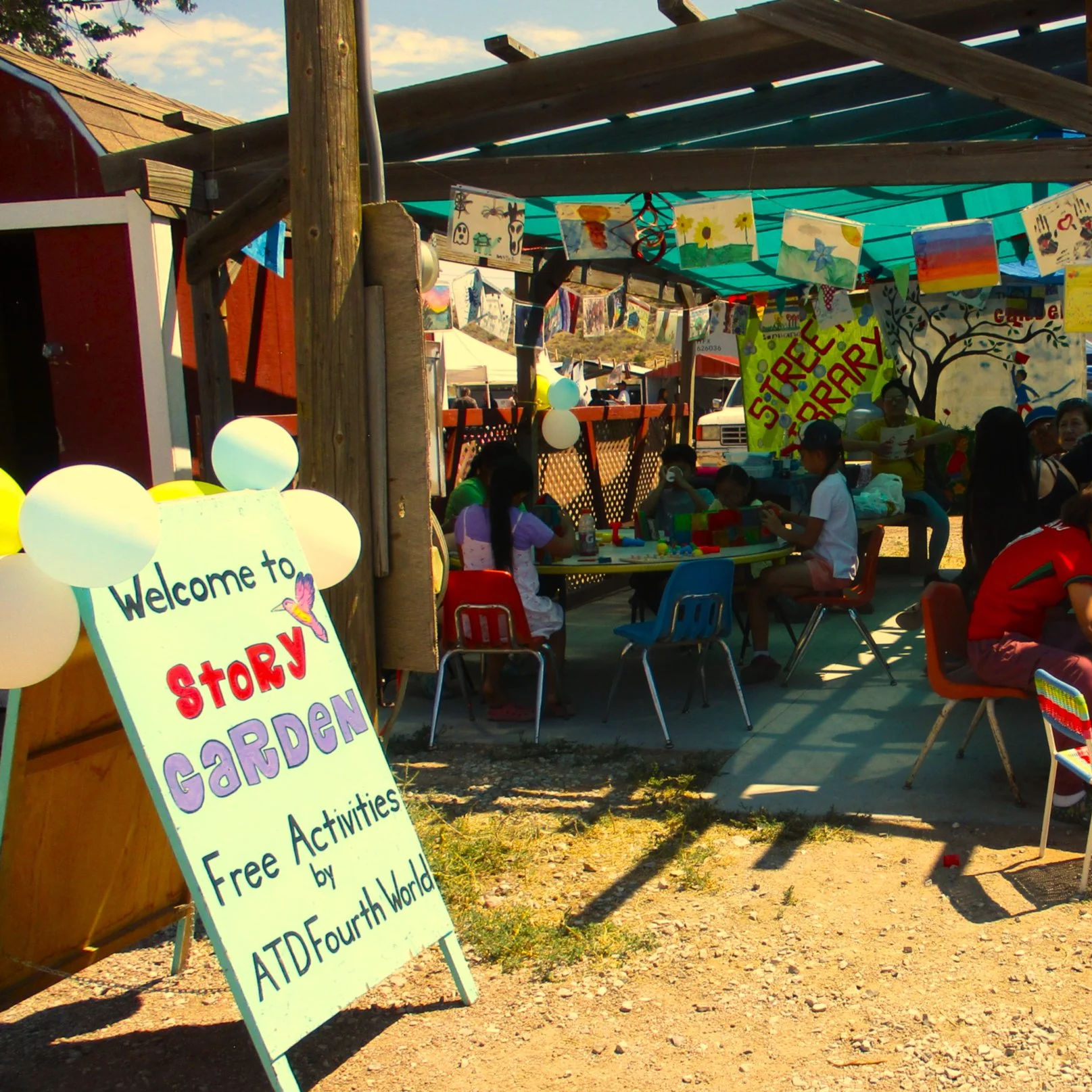
Become a Story Gardener.
Cultivate community.
Counter the multiple dimensions of poverty.
Through the end of the year, we will share stories through a series of posts about Story Garden countering each of the nine dimensions of poverty. Each story will be posted here in Latest News.
This is the seventh story: Story Garden counters Unrecognized Voice and Exclusion from Participation:
Here is the introduction to the series.
Poverty goes much deeper than income level.
Story Garden goes much deeper than children’s activities.
Story Garden builds community to counter the multidimensional aspects of poverty.
Unrecognized Voice and Exclusion from Participation:

Unrecognized Voice and Exclusion from Participation are one of the nine dimensions of poverty in the report Pushed to the Bottom: The Experience of Poverty in the U.S. The report states:
"We learn to suffer in silence" — [which] can lead to anxiety, serious health conditions, and internal rage. Without a voice, people living in poverty are unable to collectively define themselves and are consequently unable to bear the weight of the labels society places on them. (p23)
Story Garden counters Unrecognized Voice and Exclusion from Participation by creating welcoming space for everyone to be seen and heard and know they matter.
Thank You for Your Service
As the ATD Fourth World team in Gallup enjoyed the last few peaceful hours of a Flea Market Story Garden on a hot summer day, and kids were returning to their parents’ and grandparents’ market stands to get ready to pack up and leave, a man they did not know approached them. He was visibly under the influence of alcohol or drugs, so the team was cautious, with kids in the Story Garden. They smiled at him. The man looked around the area and said, “Could you talk with me? I love talking, but people usually ignore me.”
Two of the team members, Lucy and Georgia, began a conversation with the man, who called himself Jasper. Jasper told his story: He was a veteran who had fallen on hard times after being a volunteer firefighter. The team members thanked him for his service, and he seemed to be genuinely touched, probably unused to kind words from strangers.
He asked what they were set up for. Lucy explained that the Story Garden was a space for kids to read and make art and express themselves and that ATD Fourth World used it as a place to reach out to the community and meet those experiencing poverty. Jasper listened respectfully and intently, stars in his eyes, before finally saying, “Thank you for your service to this community,” with a huge smile on his face.
At the end of the conversation, he thanked the team for their kindness and moved on, clearly happy that people had taken the time to speak with him, when many would’ve turned him away – based solely on his demeanor. He had the same spark in his eyes that the team sees many times in children, when they express themselves through art or playing and feel seen.
At the end of the day, Story Garden is about expression and recognition, not just of the kids who stop by throughout the day, but also of the adults who need a break, who are not seen and heard as much as they deserve.
Through December 31st, stories of Story Garden
countering the dimensions of poverty
will be posted here in Latest News.
From 2016 to 2019 ATD Fourth World conducted participatory research that determined the various dimensions of poverty as identified by people who live in poverty every day.
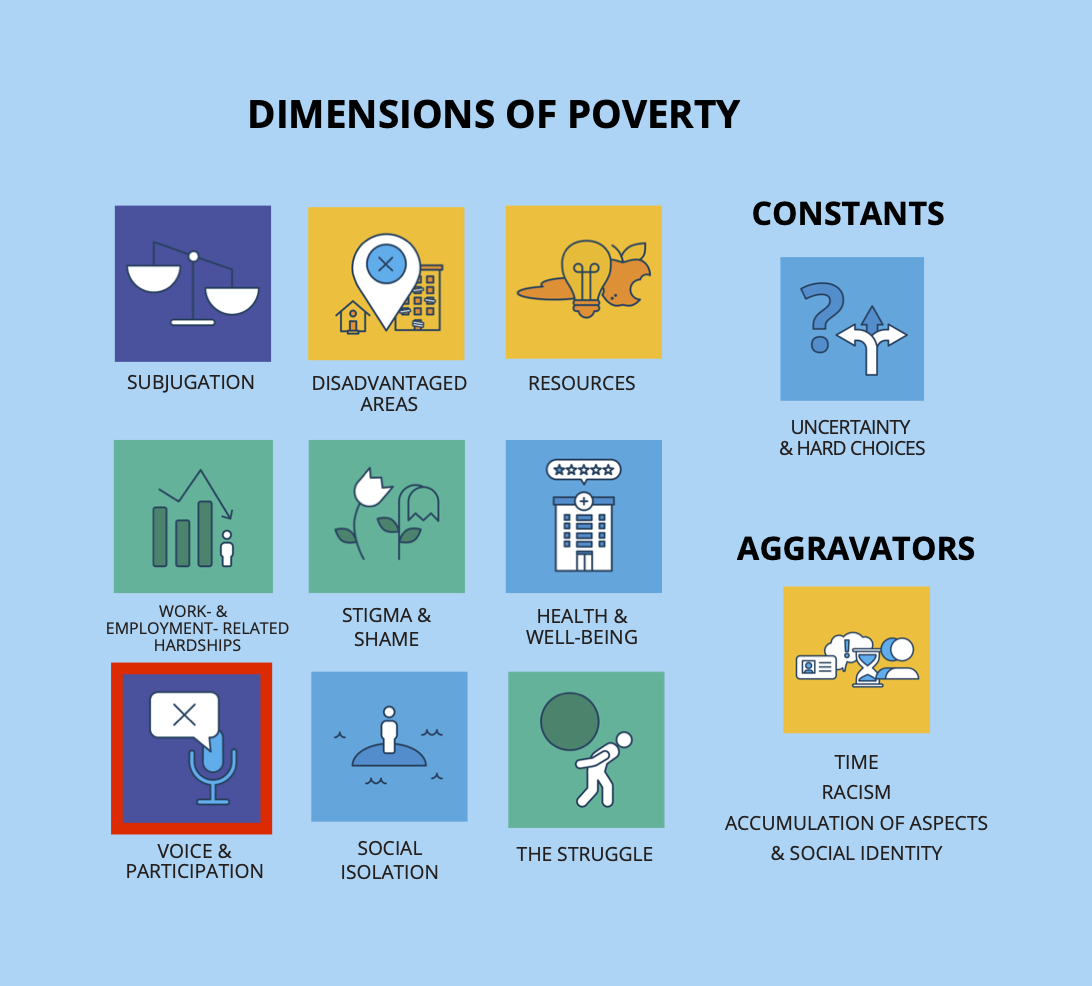
This Multidimensional Aspects of Poverty (MAP) research project identified nine dimensions of poverty, two constants, and four aggravators:
Read more or download the whole report,
Pushed to the Bottom: The Experience of Poverty in the U.S..

Subjugation labels people living in poverty as "those people,” which Story Garden counters by supporting the uniqueness of each individual and exemplifying how diversity enhances society.

Disadvantaged Areas reflect the idea that people "do not deserve more,” which Story Garden counters by collectively creating beauty in "crappy spaces," very visibly for all who live there.

Resources at bare minimum are denied to people living in poverty, including education which is limited and highly standardized. Story Garden counters this by creating communal and inclusive learning environments.

Work- and Employment- Related Hardships minimize social capital, including the availability of professional networking, which Story Garden counters by offering children role models to enrich their dreams and reveal possibilities.

Stigma and Shame of poverty is internalized by institutions, which Story Garden counters by supporting the efforts of people experiencing poverty to fulfill their hopes and aspirations for their families and communities.

Lack of Adequate Health and Well-being result from the toxic interaction of all the dimensions of poverty. Story Garden counters this by meeting, listening to, and accompanying often-ignored people who need support to access services and resources.

Unrecognized Voice and Exclusion from Participation leads people to suffer in silence and believe they don’t matter, which Story Garden counters by creating a welcoming space for everyone to be seen and heard.

Social Isolation damages the human need for community which Story Garden counters by creating a welcoming and visible space without walls or doors, where people of all ages can comfortably connect.

The Struggle is the personal effort people experiencing poverty constantly make to adapt to systems that don’t adapt to them. Story Garden counters this by creating person-centered programming that follows the lead and the needs of individuals
Through December 31st, stories of Story Garden
countering the dimensions of poverty
will be posted here in Latest News.