
🌻📖 Story Garden Counters Lack of Adequate Health and Well-being: Become a Story Gardener!
Become a Story Gardener.
Cultivate community.
Counter the multiple dimensions of poverty.
Through the end of the year, we will share stories through a series of posts about Story Garden countering each of the nine dimensions of poverty. Each story will be posted here in Latest News.
This is the sixth story: Story Garden counters Lack of Adequate Health and Well-being.
Here is the introduction to the series.
Poverty goes much deeper than income level.
Story Garden goes much deeper than children’s activities.
Story Garden builds community to counter the multidimensional aspects of poverty.
Lack of Adequate Health and Well-being:

“Lack of Adequate Health and Well-being” are one of the nine dimensions of poverty in the report Pushed to the Bottom: The Experience of Poverty in the U.S. The report states:
This aspect describes chronic external and internal conditions that affect the physical and mental wellbeing of those most affected by poverty. These chronic conditions lead to a shorter life span, curtailed by individual, generational, place-based, or historical trauma that has left its mark as emotional and physical wounds carried by people in poverty and passed from one generation to the next. (p21)
Story Garden counters Lack of Adequate Health and Well-being by meeting, listening to, and accompanying often-invisible people who need support to access services and resources.
No Longer a Secret
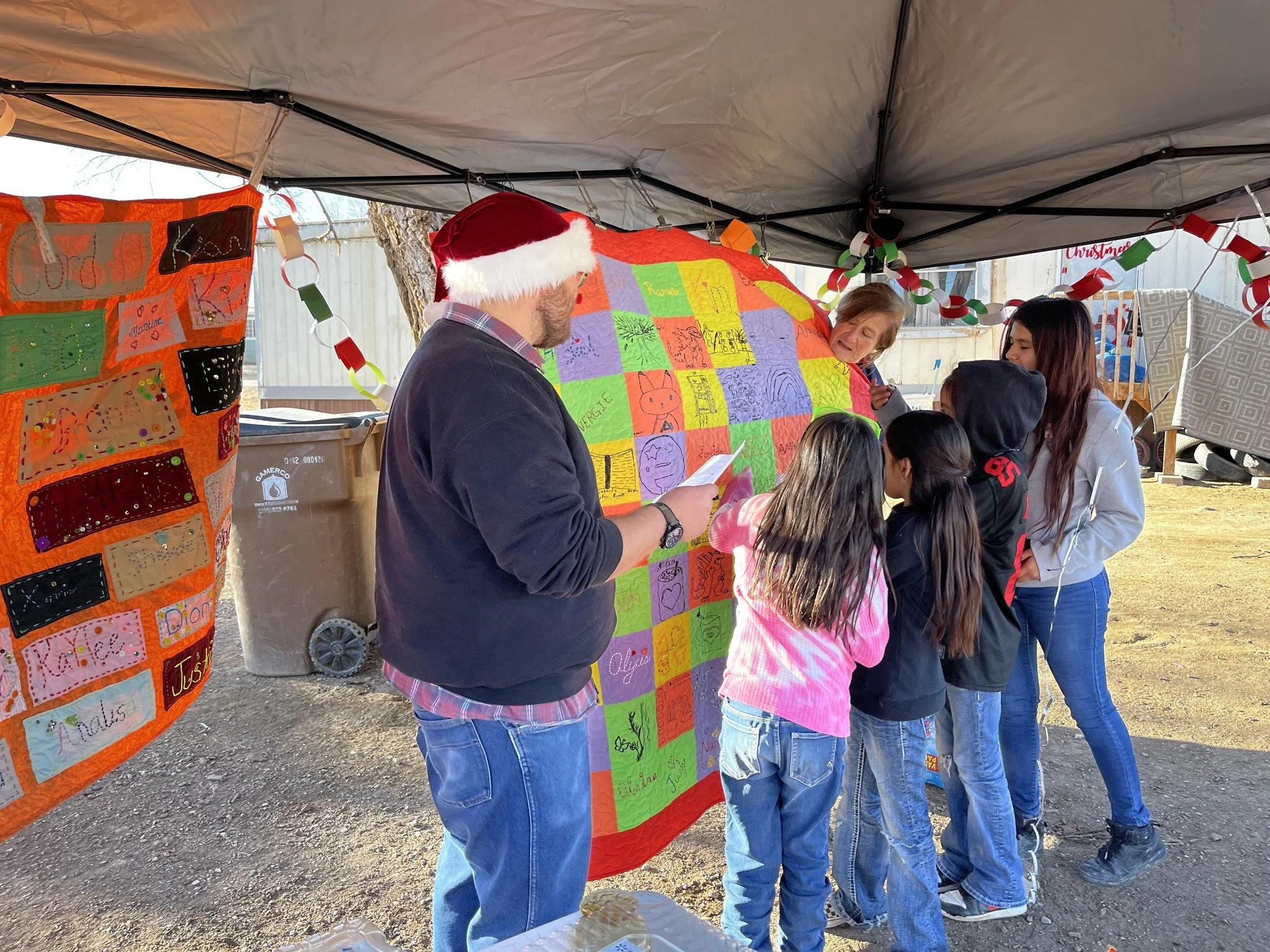
After driving into the trailer park in Gamerco, outside Gallup, New Mexico, the ATD Fourth World facilitators, Lucy and Georgia, begin setting up Story Garden for the children in the area to read, make art, and enjoy the beautiful day outside. Things are calm in the trailer park today, but in the distance, walking to the nearby convenience store, Lucy sees a young man in his mid-20s with an older woman who walks in a slow shuffle. She asks the children if they recognize those two people. No one reacts except one of the boys, who says, “That’s Nancy Skeets and her son, Max.” He then goes back to his activities, not acknowledging the walkers any further. It’s as if their existence were a secret, being kept by the kids, as if talking about the two would get them in trouble.
The next week, Nancy and Max walk by, again unacknowledged. But this time, Georgia asks a grandparent at the Story Garden who they are. She learns that the Skeets live in a trailer down the road and that things have been rough for them lately. Nothing more is said or asked about them.
The next time Lucy and Georgia see Max, he is walking by himself. They invite him to join the Story Garden. But Max is shy and explains that his mom has a bad back and can’t always make the trip for food from the convenience store, so he needs to go alone. Lucy asks Max if she can go to his trailer to meet his mom. Max fidgets awkwardly, like someone hiding a shameful secret, but cautiously agrees.
The following week, before Story Garden, the facilitators meet Nancy in her trailer. The trailer has no heat, no electricity, and no good place to sleep save for a couch that she sleeps on for her back. Lucy and Georgia talk with her about ATD Fourth World, and when they explain Story Garden, Nancy talks about how she knows the families in the trailer park.
Thanks to their consistent presence in the neighborhood at Story Garden, the ATD Fourth World New Mexico team slowly builds trust with Max and Nancy. That trust allows the team to help the Skeets, over many months, get to medical appointments and then go through the bureaucratic process to find and move into a new home with heat, electricity and real beds. Nancy’s mobility improves as she is able to rest her back more fully.
People like Max and Nancy, who face multiple challenges with little support, are often hard to reach and help. Story Garden provides an unobtrusive way for ATD Fourth World and its members to meet those who are the most isolated and be able to accompany them in what are often overwhelming obstacles to adequate health and well-being.
Now that the Skeets are not in the neighborhood, people at the Story Garden ask us how the two of them are doing, and it no longer feels like a secret. The team is happy to report that the Skeets are doing well and that they are brighter and happier than they were.
Through December 31st, stories of Story Garden
countering the dimensions of poverty
will be posted here in Latest News.
From 2016 to 2019 ATD Fourth World conducted participatory research that determined the various dimensions of poverty as identified by people who live in poverty every day.
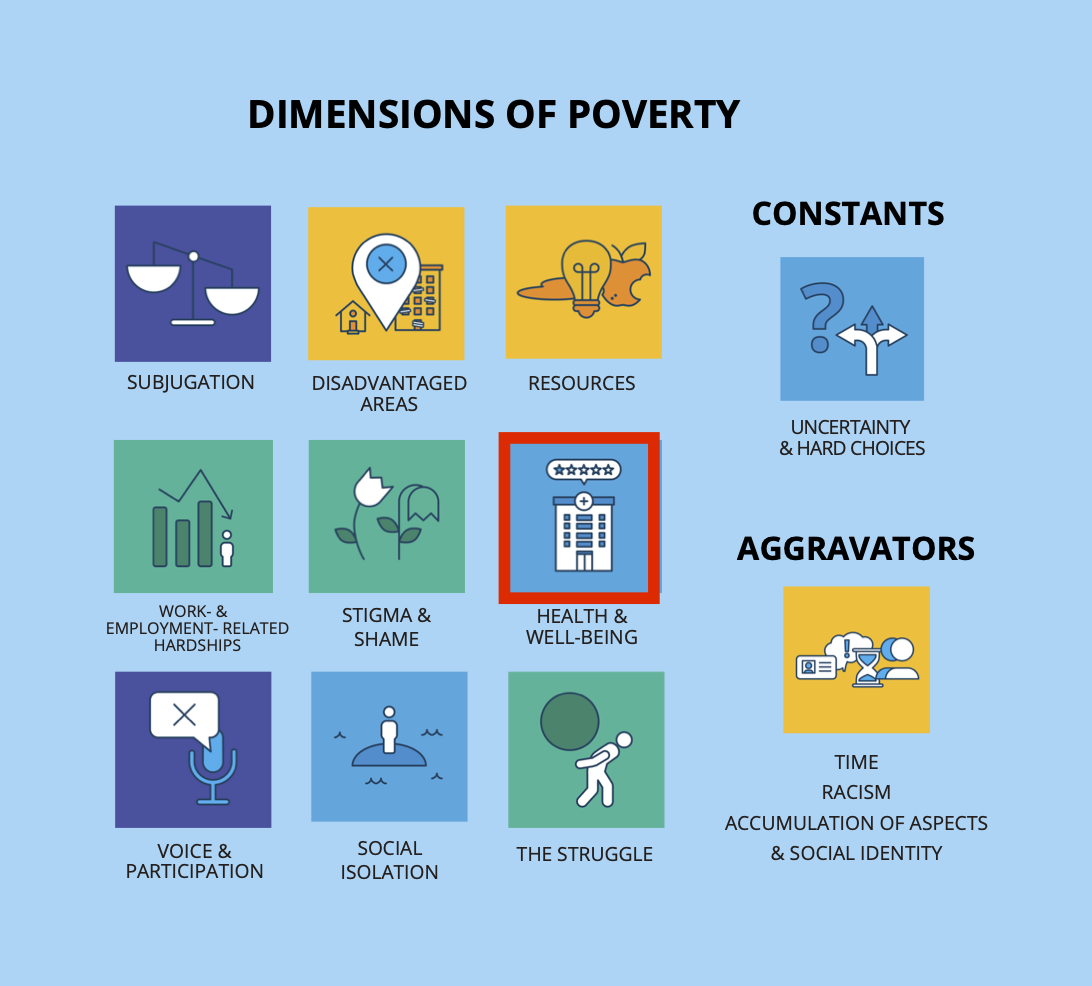
This Multidimensional Aspects of Poverty (MAP) research project identified nine dimensions of poverty, two constants, and four aggravators:
Read more or download the whole report,
Pushed to the Bottom: The Experience of Poverty in the U.S..

Subjugation labels people living in poverty as "those people,” which Story Garden counters by supporting the uniqueness of each individual and exemplifying how diversity enhances society.

Disadvantaged Areas reflect the idea that people "do not deserve more,” which Story Garden counters by collectively creating beauty in "crappy spaces," very visibly for all who live there.

Resources at bare minimum are denied to people living in poverty, including education which is limited and highly standardized. Story Garden counters this by creating communal and inclusive learning environments.

Work- and Employment- Related Hardships minimize social capital, including the availability of professional networking, which Story Garden counters by offering children role models to enrich their dreams and reveal possibilities.

Stigma and Shame of poverty is internalized by institutions, which Story Garden counters by supporting the efforts of people experiencing poverty to fulfill their hopes and aspirations for their families and communities.

Lack of Adequate Health and Well-being result from the toxic interaction of all the dimensions of poverty. Story Garden counters this by meeting, listening to, and accompanying often-ignored people who need support to access services and resources.

Unrecognized Voice and Exclusion from Participation leads people to suffer in silence and believe they don’t matter, which Story Garden counters by creating a welcoming space for everyone to be seen and heard.

Social Isolation damages the human need for community which Story Garden counters by creating a welcoming and visible space without walls or doors, where people of all ages can comfortably connect.

The Struggle is the personal effort people experiencing poverty constantly make to adapt to systems that don’t adapt to them. Story Garden counters this by creating person-centered programming that follows the lead and the needs of individuals
Through December 31st, stories of Story Garden
countering the dimensions of poverty
will be posted here in Latest News.