
🌻📖 Story Garden Counters Social Isolation: Become a Story Gardener!
Become a Story Gardener.
Cultivate community.
Counter the multiple dimensions of poverty.
Through the end of the year, we will share stories through a series of posts about Story Garden countering each of the nine dimensions of poverty. Each story will be posted here in Latest News.
This is the eighth story: Story Garden counters Social Isolation:
Here is the introduction to the series.
Poverty goes much deeper than income level.
Story Garden goes much deeper than children’s activities.
Story Garden builds community to counter the multidimensional aspects of poverty.
Social Isolation

Social Isolation is one of the nine dimensions of poverty in the report Pushed to the Bottom: The Experience of Poverty in the U.S. The report states:
Isolation caused by the multiple aspects of poverty can take many forms. Some people living in poverty do not have a social network of family or friends they can call on when they need support. Some people may be ostracized by others in their community who perceive them to be lower in socio-economic class. (p23-24)
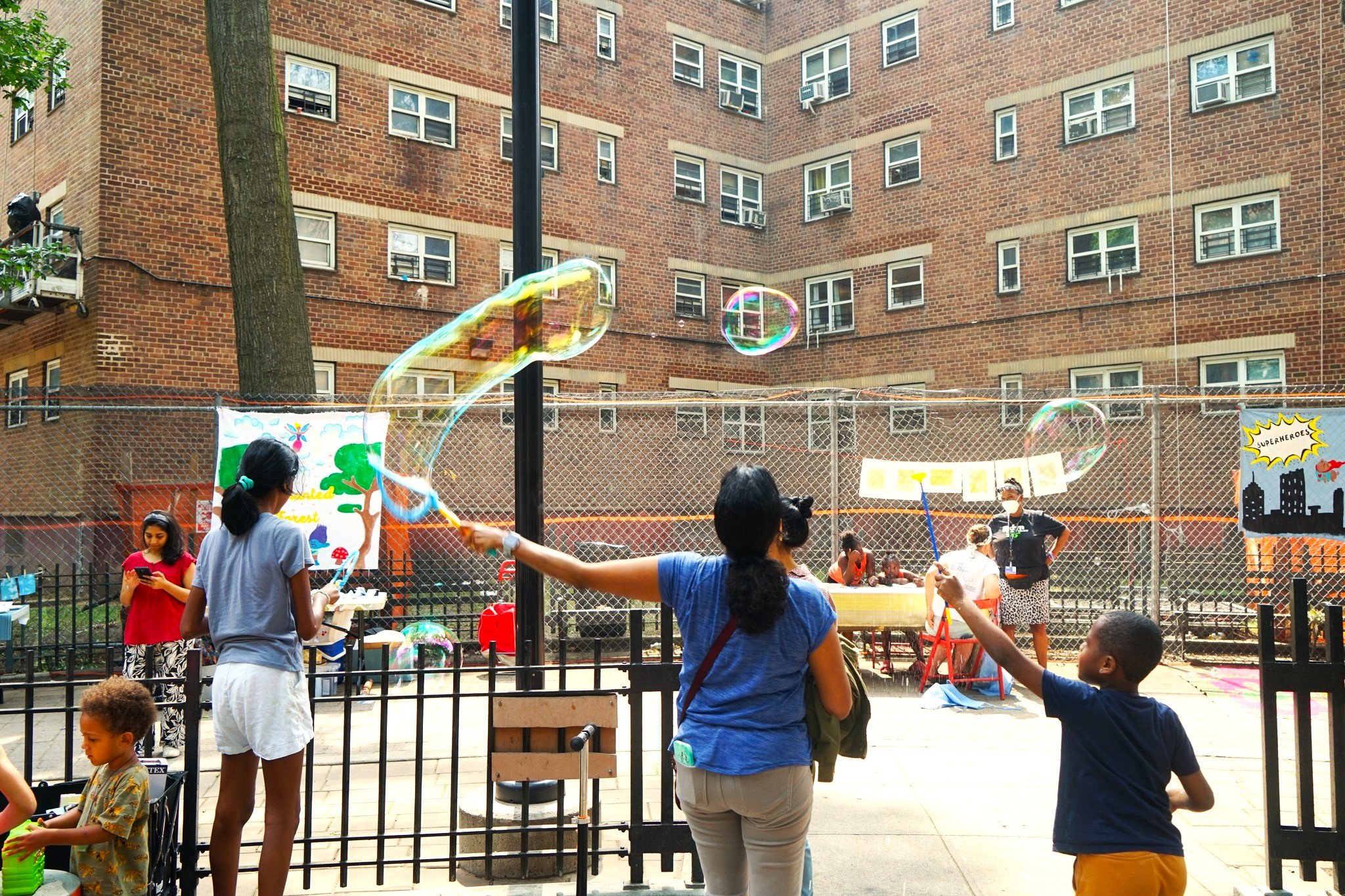
Story Garden counters Social Isolation by creating a welcoming and visible space, without walls or doors, where people of all ages can comfortably connect.
Through a Window
A father of three girls gazes alone through a window from his apartment building in Brownsville, New York City, with streets empty of playful children because mothers fear for their safety amid violence and delinquency. Parents protectively await their children at the end of the school day, walking them straight home. People pass along the street, but no one feels that they belong. This is what the man gazed upon day after day. This was exactly the kind of place where a Story Garden needed to be planted.
The ATD Fourth World New York team sprouted a Story Garden on the street, catching the attention of this man gazing through a window, who had watched curiously for months. After studying the scene below, he decided whatever was happening down there would be good for his girls, so he brought his children to Story Garden.
He’s now there whenever his girls are there, and his presence brings a sense of trust that encourages others living in the surrounding buildings to bring their children and grandchildren to visit Story Garden. Mothers and grandmothers bring little ones to read and play and learn and build community, while the adults talk, ask questions, support each other, and become neighbors.
Mr. Parson is now a part of an engaged group of parents that his presence helped create, inspired by that view of a colorful learning community called Story Garden that he witnessed through a window years ago.
A wise grandmother observed, “Story Garden is a safe place because neighbors stay with us. Their presence, our presence, creates conditions that allow the kids to enjoy the street.”
Together, these parents and the ATD Fourth World team are chipping away at isolation by creating a welcoming and visible space where people of all ages can comfortably connect.
Through December 31st, stories of Story Garden
countering the dimensions of poverty
will be posted here in Latest News.
From 2016 to 2019 ATD Fourth World conducted participatory research that determined the various dimensions of poverty as identified by people who live in poverty every day.
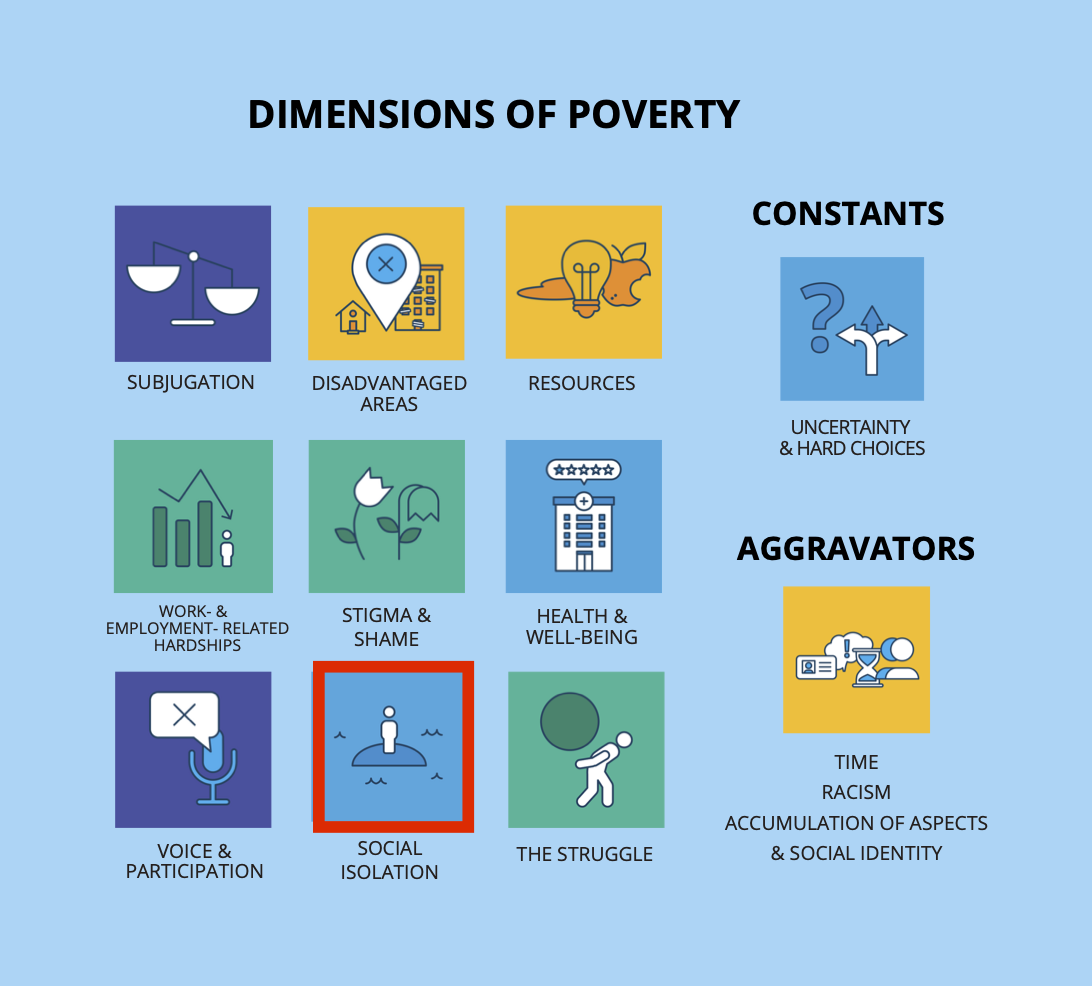
This Multidimensional Aspects of Poverty (MAP) research project identified nine dimensions of poverty, two constants, and four aggravators:
Read more or download the whole report,
Pushed to the Bottom: The Experience of Poverty in the U.S..

Subjugation labels people living in poverty as "those people,” which Story Garden counters by supporting the uniqueness of each individual and exemplifying how diversity enhances society.

Disadvantaged Areas reflect the idea that people "do not deserve more,” which Story Garden counters by collectively creating beauty in "crappy spaces," very visibly for all who live there.

Resources at bare minimum are denied to people living in poverty, including education which is limited and highly standardized. Story Garden counters this by creating communal and inclusive learning environments.

Work- and Employment- Related Hardships minimize social capital, including the availability of professional networking, which Story Garden counters by offering children role models to enrich their dreams and reveal possibilities.

Stigma and Shame of poverty is internalized by institutions, which Story Garden counters by supporting the efforts of people experiencing poverty to fulfill their hopes and aspirations for their families and communities.

Lack of Adequate Health and Well-being result from the toxic interaction of all the dimensions of poverty. Story Garden counters this by meeting, listening to, and accompanying often-ignored people who need support to access services and resources.

Unrecognized Voice and Exclusion from Participation leads people to suffer in silence and believe they don’t matter, which Story Garden counters by creating a welcoming space for everyone to be seen and heard.

Social Isolation damages the human need for community which Story Garden counters by creating a welcoming and visible space without walls or doors, where people of all ages can comfortably connect.

The Struggle is the personal effort people experiencing poverty constantly make to adapt to systems that don’t adapt to them. Story Garden counters this by creating person-centered programming that follows the lead and the needs of individuals
Through December 31st, stories of Story Garden
countering the dimensions of poverty
will be posted here in Latest News.