From Speeches to Real Change: What I Learned at CSocD64
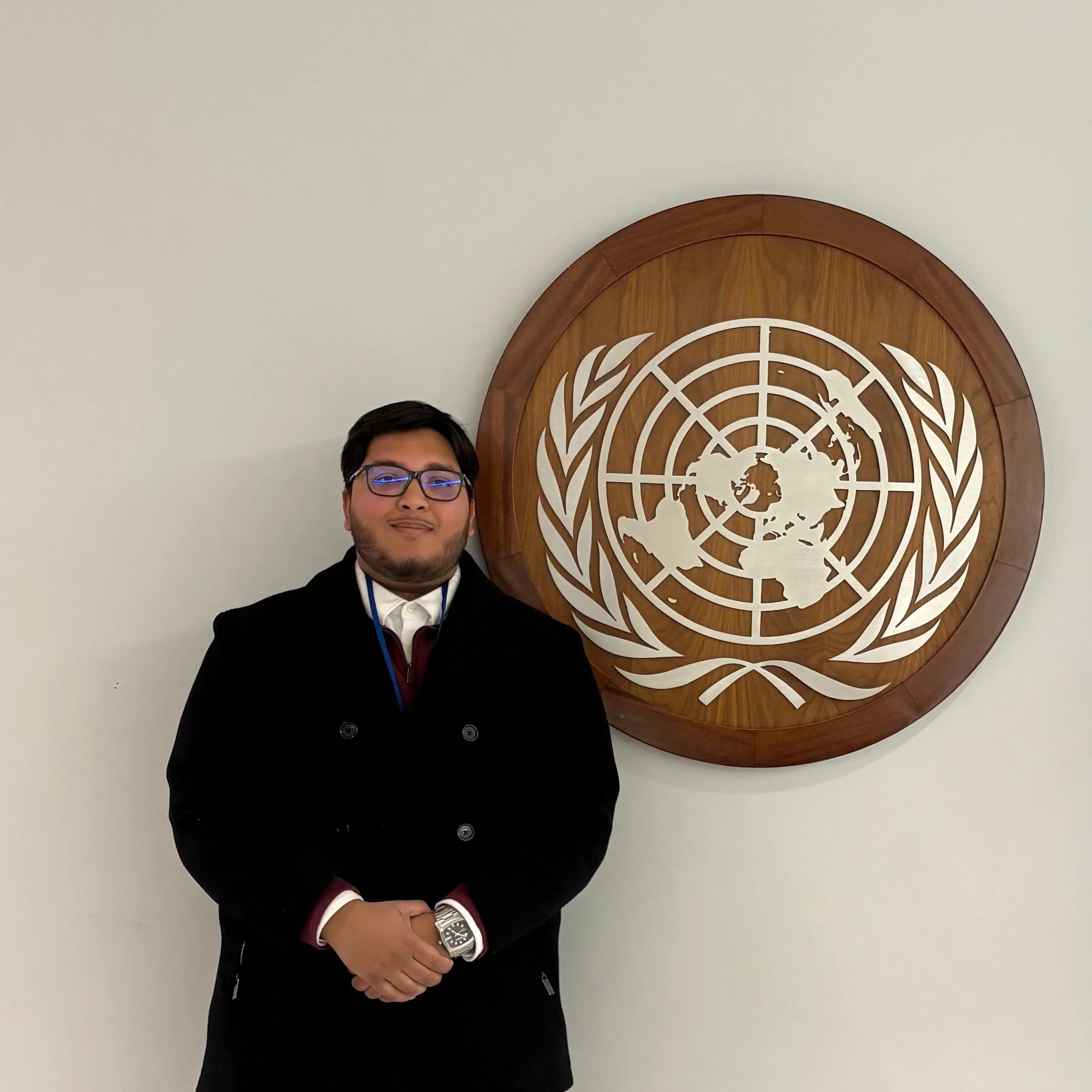
During the first week of February, I attended the 64th Commission for Social Development (CSocD64), which was a significant learning experience as it was my first commission as ATD Fourth Worlds UN advocacy apprentice. I tested my general note-taking and observational skills, and I made connections and reflected on the commission's theme of “Advancing Social Development and Social Justice through Coordinated, Equitable, and Inclusive Policies” with ATD Fourth Worlds priorities.
The commission highlighted the unique dynamics between Member States and Civil Society. They both shared new ideas and efforts they are participating in to advance social development, but more often, you saw Civil Society pushing the boundaries and challenging the means of Member States. As commission chair H.E Khrystyna Hayovyshyn of Ukraine noted during the commission, the true measure of success is actual policy change, not just the number of meetings held. This experience emphasized the vital difference between simply talking about change and actually making it happen.
Much of the conversation centered on the momentum from the Doha Declaration and comparisons to the Copenhagen commitments. While some speakers used general commitments as "fluff," others highlighted specific, impactful initiatives. For instance, Austria mentioned the issue of loneliness, while Poland brought up childcare. Peru shared concrete progress by using agricultural tools and industrial kitchens to help families move beyond cash grants. Additionally, Egypt’s shift to viewing cash assistance as a "legitimate right", rather than a gift, helps acknowledge the humanity of people living in poverty, a mindset that aligns closely with ATD Fourth World’s mission.
A point that stood out to me at the commission was that social development is a smart investment, not just an expense. Governments and corporations must not let initial cost and efforts offset the long-term goal of eradicating poverty; we must continue to implement real change and learn from each other's efforts, which is what I saw as one of the most important roles of the United Nations. To meet the 2030 Agenda for Sustainable Development and the goals of the Doha Declaration, we need more than thorough speeches; we need the passion of Civil Society to hold Member States accountable to their promises.
My role as an observer helped me not only understand the structure of the United Nations, but also made me challenge my way of thinking in relation to drawing connections between their discussions and the priorities of ATD Fourth World. Looking ahead, there are great opportunities for ATD to follow up with organizations and grow. I look forward to applying these lessons to better support ATD’s mission and to continue making meaningful connections at the United Nations.