2026 Fall Newsletter: Changing the Narrator
Click here to read the newsletter in PDF
Who gets to tell the story of poverty?
Too often, people facing poverty are spoken about rather than listened to. ATD Fourth World changes the narrative on poverty by bringing a new narrator into the story: people who have first-hand experience of poverty.
It means creating spaces where people can share their experiences, contribute their knowledge, and participate as equals. It means bringing lived experience into research, advocacy, and policy spaces, alongside the knowledge of researchers, professionals, and policymakers. When different forms of knowledge come together, we can challenge assumptions about poverty, better understand its root causes, and work toward solutions that reflect the realities of those most affected.
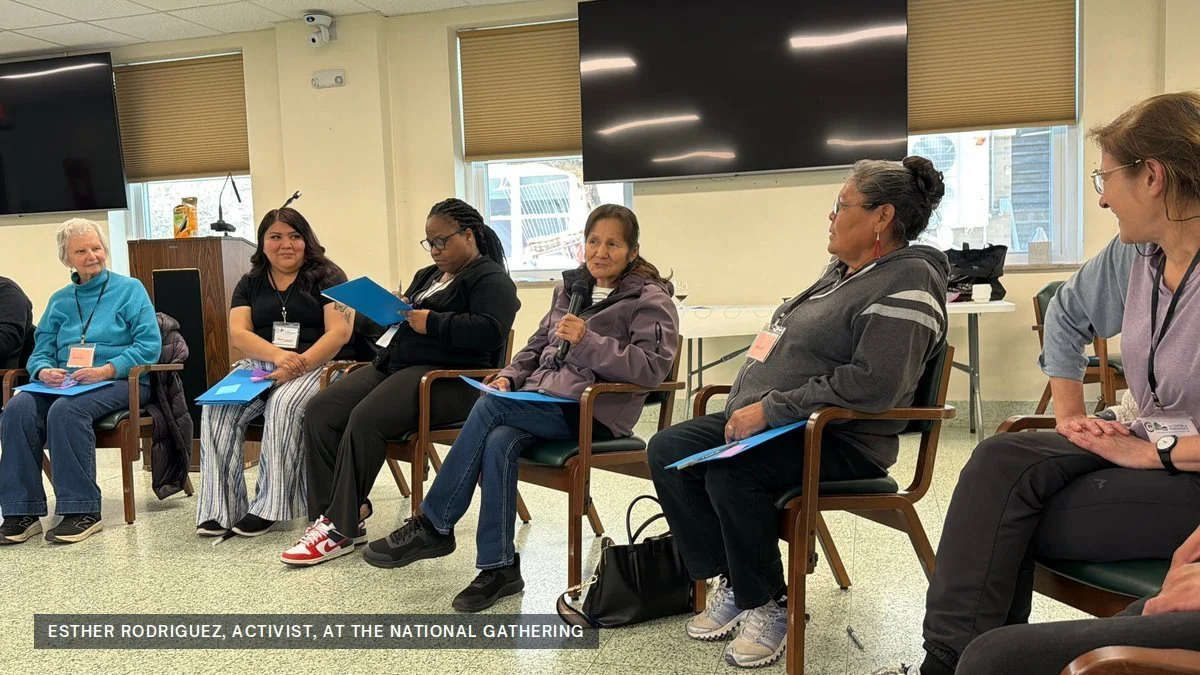
I vowed that if I stayed, I would see to it that one day these families could go up to the Vatican, the Elysée Palace, and the UN… They had to be there, on equal terms, in all places where people discuss and make decisions not only about the present, but also about people’s destiny and the future of humanity.”
We believe in language that puts people first.
Words shape who is treated as an expert on poverty — and who gets heard.
The discourse around poverty is counterproductive. Too often people facing the biggest hardships are given labels like “poor people,” “broke,” or even “lower class.” These labels isolate and stigmatize people who live their day-to-day lives in survival mode. Human beings just trying to navigate extreme poverty are treated with less than dignity, which can keep them from realizing the true power they have as individuals with collective experience and knowledge.
The ATD Fourth World community believes in using language that puts people first and acknowledges the unseen contributions people living hard lives offer their families and communities. In the media, in research, and even in conversation, the words used can have a huge impact on how people facing extreme poverty are perceived. Divisive words ignore the root of poverty and attribute laziness, moral failing, or sinister stereotypes, making it easier to dismiss people, while harmful systems continue to trap people in poverty.
Choosing to use language that maintains the dignity of all people, the community builds collective confidence. As that confidence grows, people pushed aside by harmful rhetoric become the narrators of their own stories, and the ones making decisions about their own lives.
Youth Digital Storytelling: Making Space for Young Voices
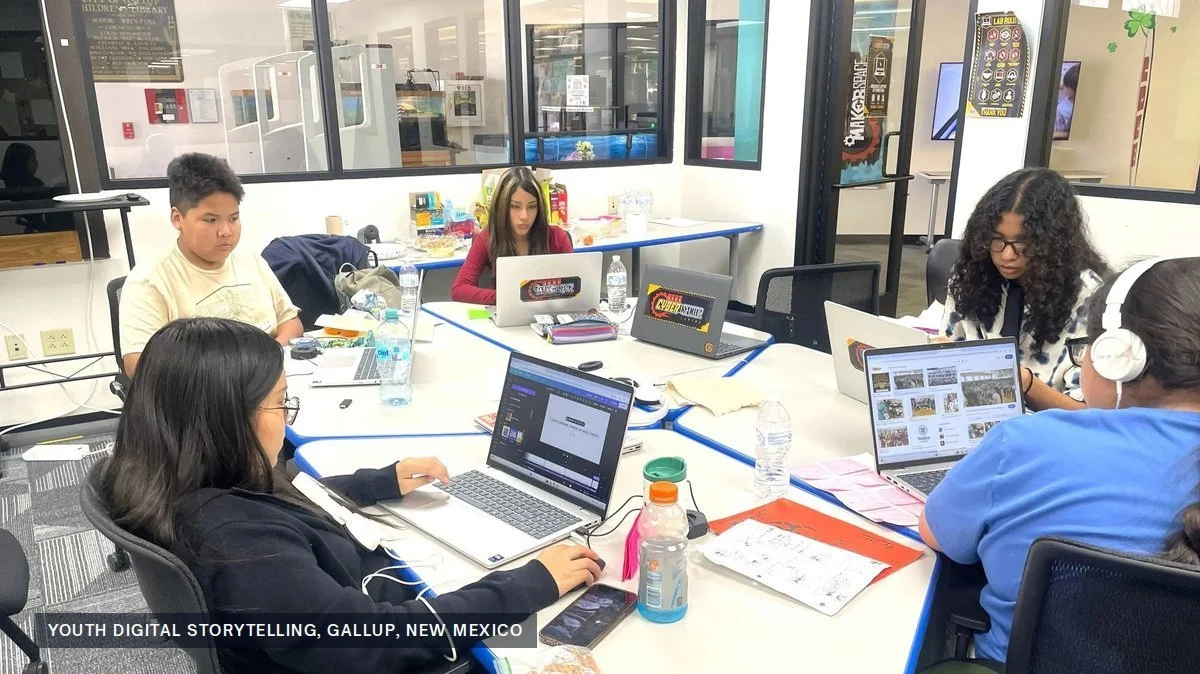
In Gallup, New Mexico, young people came together to share their own experiences of education through Digital Storytelling. The project grew from an earlier conversation with adults that highlighted an important gap: young people’s experiences and perspectives were missing from the discussion.
Through writing, art, photography, and video, youth developed personal digital stories about experiences that mattered to them. They chose what to say and how to express it, using their own words and creativity.
The project reflects what it means to change the narrator: creating space for young people to speak from their own experience, rather than having their experiences defined by others. Their stories were shared with family members and the wider community, allowing their perspectives to be heard and recognized.
Centering Lived Experience
Maryann Broxton believes in the power of small steps.
That belief runs through Maryann’s work as the US Director of Policy and Advocacy with ATD Fourth World. Whether she is leading a training, organizing a webinar, or helping someone prepare for an advocacy meeting, she looks for ways to help people recognize their own knowledge and power.
She knows that change does not happen overnight. “The fight for good takes one little step at a time over a long period of time.” She says. “It’s a marathon. It’s not a sprint.”
For Maryann, her role is to support, not to speak for others. “We will give you the tools, we will give you the support, we will stand by you and stand with you. But it’s you. What do you want?” She encourages people with lived experience to “take up space” and make their voices heard.
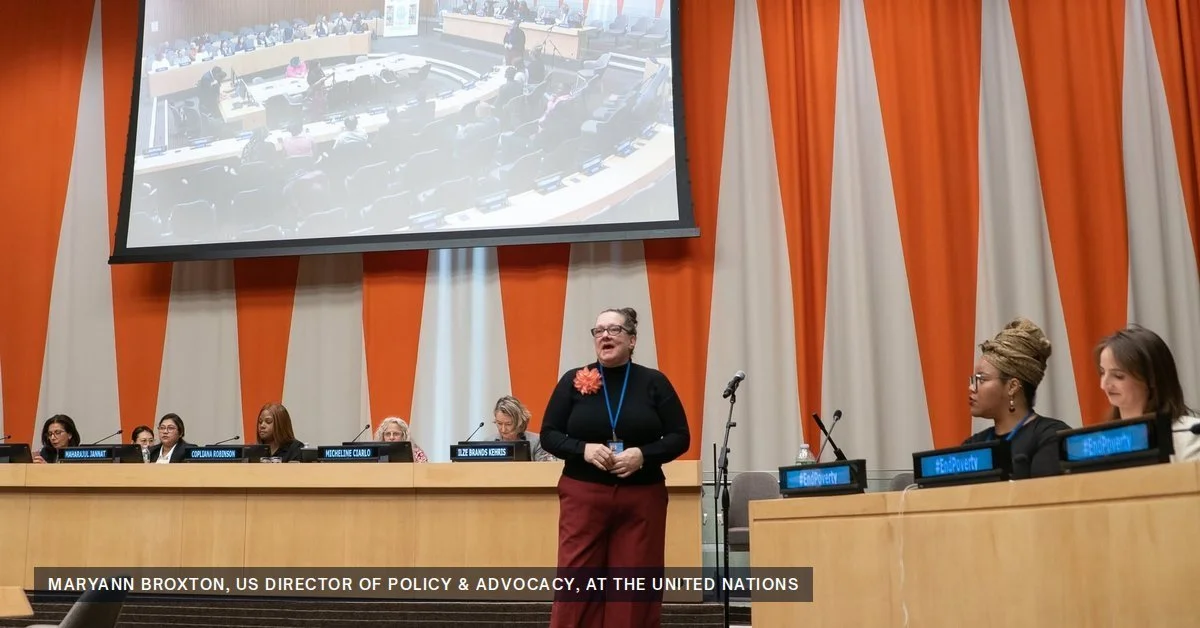
As the Advocacy and Policy team looks ahead, the goal is to create space for conversations about important issues that are accessible to everyone, while making sure that people with experience of poverty are heard as experts. By bringing experiential knowledge alongside other forms of expertise, the team can help challenge stereotypes and incomplete narratives about poverty, build a fuller understanding of the realities people face, and support more informed conversations about solutions and change.
For Maryann, this is part of a longer journey. “As advocates we stand on the shoulders of people who came before us. And if they did it, we can too.”
October 17 is one example of what this can look like. Each year, people with lived experience of poverty have the opportunity to bring their voices and experiences to the United Nations in New York City. Preparing to take part can involve developing messages together, rehearsing speeches, arranging transportation and childcare, and creating a supportive community around each speaker. These are the kinds of conditions that make meaningful participation possible.
Help us make sure those voices are counted.
Thank you so much for your continued support of ATD Fourth World.
Together we can help ensure that those pushed to the bottom are brought to the highest places to become the narrators of their own stories.
At ATD Fourth World, we know the value of these testimonies and that no real change can happen if the people truly affected by poverty are excluded from the places where decisions are made.
But creating these spaces takes more than simply inviting someone to the table.
Practical support
Participation requires transportation, childcare, meals, event costs, and time away from work or other responsibilities. Making these practical needs possible helps ensure that people can actually participate.Preparation and encouragement
Finding your voice and speaking publicly takes preparation. We help speakers write, edit, practice, record in their own voice, and build the confidence and skills to share their experiences in public spaces.Community and relationships
It takes trusted relationships and a community that stands alongside people, listens, encourages them, and continues to walk with them as they make their voices heard.Opportunities to participate
Building partnerships that bring people with lived experience into research, advocacy, events, and the places where decisions are made takes time and continuous relationships with like-minded organizations.Your donation helps make these opportunities possible. It allows us to pay for travel and other practical needs, and to take time to prepare and support speakers as they step into public speaking. Most importantly it allows us to continue creating spaces where people with lived experience of extreme poverty can grow in confidence to share their story, so no one else becomes the narrator of their experience.
“I joined to be part of a movement that had a different approach to poverty. The movement sees me as a partner and an expert in my own life. Joining ATD Fourth World showed me justice wasn’t just a conversation around the dinner table, but it was practice.
I joined a movement that gave me a voice and others like me living in poverty. Having a voice made me feel more powerful and confident. My voice will be counted, not drowned out.”